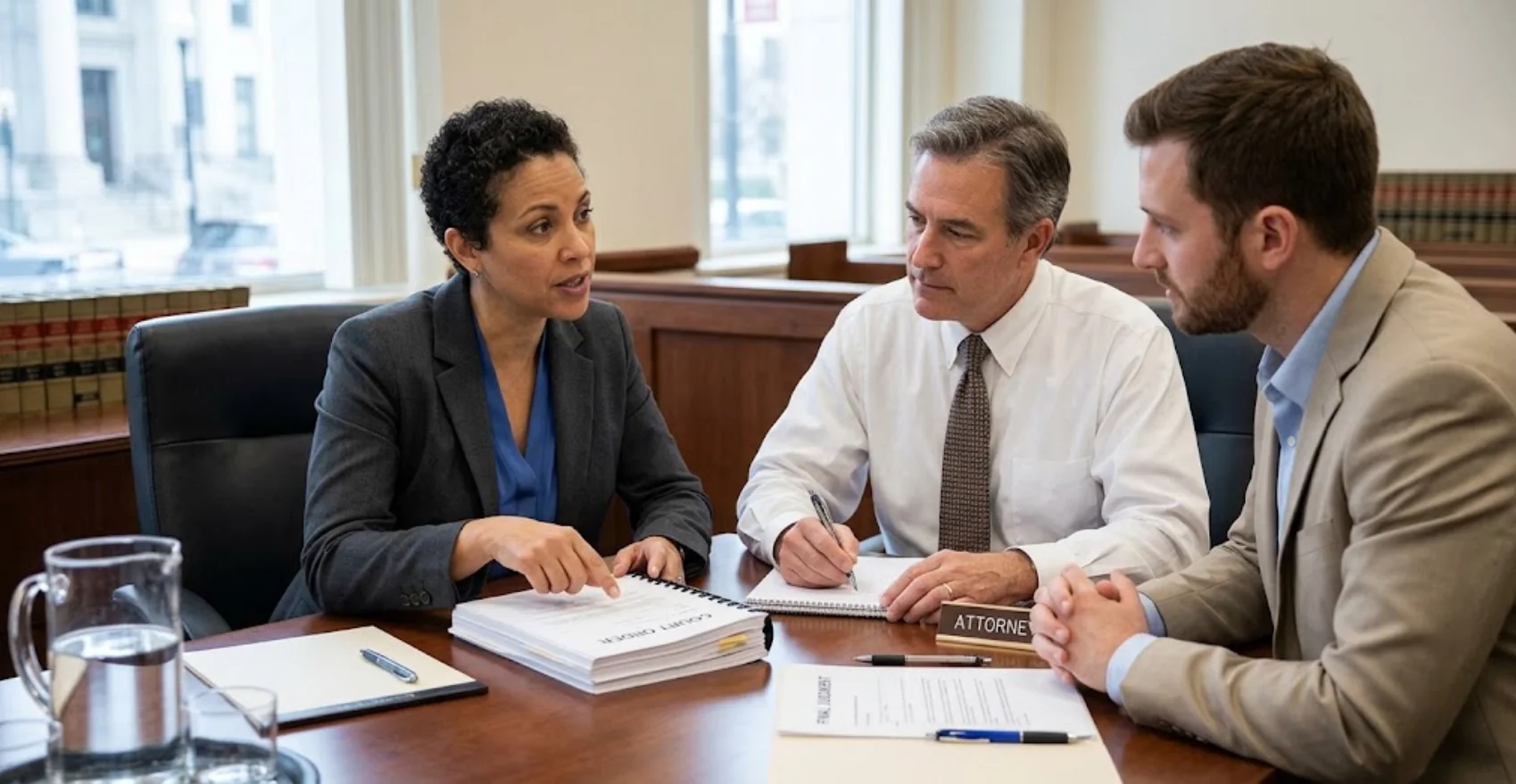
If you see enjoined in a U.S. court document, it usually means a court has ordered certain conduct. The order often requires someone to stop an activity, although some injunctions require action. Because these orders carry legal force, ignoring them can create serious consequences.
In ordinary English, the word can also mean ordered, directed, or strongly instructed. Legal usage is narrower because it normally connects the command to an injunction or court order. Understanding that distinction makes court opinions and legal news much easier to read.
Key Facts at a Glance
| Key point | Plain-English explanation |
|---|---|
| Basic meaning | Ordered or directed with authority |
| Common legal meaning | Restrained or required to act through a court order |
| Related noun | Injunction |
| Common order types | Temporary restraining order, preliminary injunction, permanent injunction |
| Who may be affected | Parties and certain people acting with them |
| Ignoring the order | May lead to contempt proceedings |
| Governing rules | Depend on federal or state law and the specific court |
Direct answer: In U.S. legal usage, the term usually means a court has formally ordered someone to act or stop acting. The order normally appears through an injunction. The exact duties depend on the wording, scope, court, and governing law.
What Does Enjoined Mean in U.S. Law?
To be enjoined usually means that a judge has imposed a legally binding restriction or requirement. Cornell Law School defines “enjoin” as prohibiting conduct through a court order. The term is closely connected with an injunction. A court can prohibit conduct when continued activity may cause legally recognized harm. It may also require affirmative action in certain situations. The exact remedy depends on the claims, evidence, and legal standards involved. That court must also possess authority over the dispute and affected parties. Newpapero’s explanation of court jurisdiction explains why judicial power has legal limits. An order cannot be understood properly without knowing which court issued it.
Enjoin, Injunction, and Court Order: How the Terms Connect
“Enjoin” is the verb describing what a court does. An “injunction” is the resulting form of court-ordered relief. A broader “court order” can cover many directions beyond injunctions. For example, a judge may issue an injunction stopping a company from using disputed intellectual property. The court has therefore restrained particular conduct through its equitable authority. The wording of the signed order determines exactly what conduct is covered. This distinction matters when reading legal reporting. A ruling may discuss a request for relief before any restriction becomes effective. Readers should check whether the judge granted, denied, modified, or stayed the requested injunction.
Prohibitory and Mandatory Injunctions
Injunctions often fall into two practical groups. A prohibitory injunction tells a person or organization not to perform specified conduct. A mandatory injunction requires affirmative action instead. A prohibitory order might stop the sale of an allegedly infringing product. A mandatory order could require a party to take a corrective action. Courts may apply different standards depending on the remedy and jurisdiction. The distinction affects how a party complies with the order. Stopping an activity may require different steps from completing a required task. Anyone subject to an actual order should read its exact terms carefully.
Temporary, Preliminary, and Permanent Relief
U.S. courts may issue injunctions at different stages of litigation. The label usually reflects when the relief applies and how long it may continue. Federal procedure commonly distinguishes temporary restraining orders, preliminary injunctions, and permanent injunctions. A temporary restraining order can provide short-term emergency relief before a fuller hearing. Federal Rule of Civil Procedure 65 contains requirements for federal injunctions and restraining orders. State courts use their own procedural rules.
A preliminary injunction generally operates while litigation remains unresolved. It can preserve existing conditions or limit conduct before final judgment. The requesting party must satisfy the legal standard that applies in that court. A permanent injunction generally follows a final decision on the merits. Despite the name, later modification may sometimes be possible under applicable law. The judgment and later court orders determine the continuing obligations.
What Must a Federal Injunction Say?
Federal Rule of Civil Procedure 65 requires specificity in an injunction or restraining order. The order must state why it was issued and describe its terms specifically. It must also describe the restrained or required acts in reasonable detail. That requirement helps affected people identify what they must do. A vague command can create serious problems for compliance and enforcement. Readers should focus on the operative language rather than a news headline. Federal and state proceedings can differ substantially. Newpapero’s guide to a bench trial provides another example of procedural differences. The governing court rules always matter when interpreting litigation.
Who Can Be Bound by an Injunction?
An injunction normally binds the parties identified by the court. Federal Rule 65 can also reach certain officers, agents, employees, attorneys, and related participants. Actual notice of the order can become important in determining who is bound. This prevents a party from avoiding restrictions through another person acting on its behalf. The rule does not automatically bind everyone connected to the dispute. Courts examine the relationship and conduct involved. Businesses should therefore identify which employees must understand the order. Individuals should also avoid assuming that another person can lawfully perform prohibited conduct for them. Specific legal advice may be needed when the order affects several people.
What Happens If Someone Violates an Injunction?
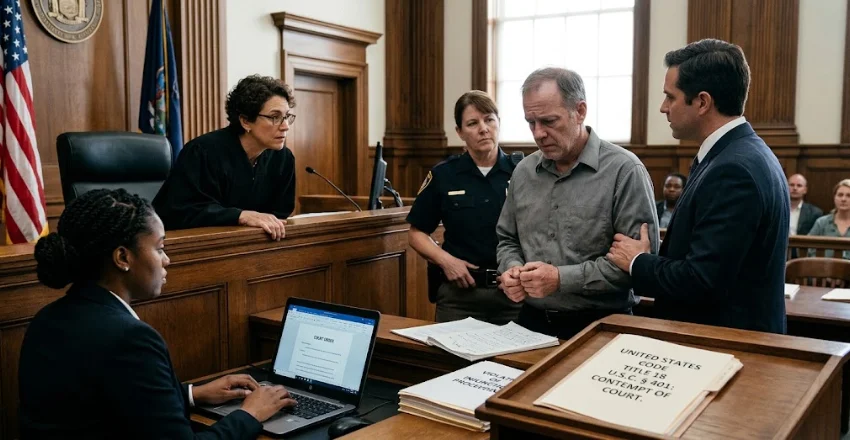
Disobeying a valid court order can lead to contempt proceedings. Federal courts have statutory authority concerning contempt under 18 U.S.C. § 401. Available consequences depend on the violation and type of proceeding. Civil contempt often aims to secure future compliance or compensate for harm. Criminal contempt can punish completed disobedience under applicable procedures. The distinction affects procedural rights and possible sanctions. A person should not assume that disagreeing with the order permits noncompliance. Parties usually challenge disputed injunctions through motions or appellate procedures. Ignoring the order can create additional legal problems while that challenge remains pending.
How an Injunction Differs From a Final Trial Result
An injunction does not always mean the entire lawsuit has ended. Temporary and preliminary relief may apply while the main claims remain undecided. A final judgment may arrive much later. That distinction also appears in other courtroom outcomes. A hung jury can end a trial without resolving every charge. Likewise, interim injunctive relief can affect conduct without deciding every issue. Readers should therefore separate procedural status from the immediate order. Ask what the judge decided and what remains unresolved. That approach prevents temporary relief from being mistaken for a final victory.
Practical Example
Imagine two software companies dispute ownership of confidential code. Company A asks a court to stop Company B from distributing a disputed product. The judge grants temporary relief while the lawsuit continues. Company B must follow the restrictions stated in the order. That duty can exist even though ownership has not received a final ruling. A later hearing could continue, modify, or dissolve the restriction. This example shows why context matters. The important questions are what conduct the order covers and how long it lasts. The underlying lawsuit may still involve many unresolved legal and factual questions.
How to Read the Term in a Court Document
Start by finding the sentence that contains the word and identifying who received the command. Then locate the actual order, because summaries may omit crucial limits. Check whether the restriction concerns a temporary, preliminary, or final remedy. Next, identify the specific conduct covered by the order. Look for dates, exceptions, definitions, affected people, and geographic limits. These details can determine whether particular conduct falls within the restriction. Finally, check whether later orders changed the original ruling. Appeals, stays, amended orders, and settlements can alter what remains effective. Current docket information is usually more reliable than an older news report.
Common Misunderstandings
Several misunderstandings can make this legal term seem more complicated than it is:
- It does not always mean someone permanently lost a lawsuit.
- It does not always require a person to stop something.
- It is not interchangeable with every court order.
- A temporary restriction may expire or later change.
- Federal and state procedures can differ.
- The exact wording of the signed order matters.
These distinctions are important because legal headlines often shorten procedural events. A headline may say that a policy was blocked without explaining the order’s scope. Reading the court’s actual language gives a clearer picture.
The Practical Takeaway
This legal term describes an authoritative command, most often connected with injunctive relief in U.S. courts. The key question is not simply whether a judge imposed a restriction. You also need to know its scope, duration, affected parties, and current status. When reading a real case, start with the signed order and any later rulings. Check the applicable federal or state rules before drawing conclusions. For an active dispute, speak with a licensed attorney in the relevant jurisdiction.
Frequently Asked Questions About Enjoined
What does enjoined mean in simple terms?
It means someone was formally ordered or directed to do something, or to stop doing something. In legal writing, the command commonly comes from a court. The actual order controls what the person must do.
Does an injunction always stop an action?
No. Many injunctions prohibit conduct, but some require affirmative action. Lawyers often distinguish prohibitory orders from mandatory orders. The wording of the judgment or order determines which type applies.
Is an injunction the same as a restraining order?
They are related, but the labels can describe different forms of relief. Federal courts distinguish temporary restraining orders from preliminary and permanent injunctions. State terminology and procedures may differ.
Can a court order be appealed?
Some injunction orders can receive immediate appellate review under federal law. The availability and timing of an appeal depend on the order and governing rules. Filing an appeal also does not automatically answer whether the order remains effective.
Does violating an injunction automatically mean jail?
No. Consequences vary with the facts, court, type of contempt, and governing law. Possible remedies can include fines, coercive measures, or criminal sanctions. An actual violation should be discussed with a qualified attorney promptly.