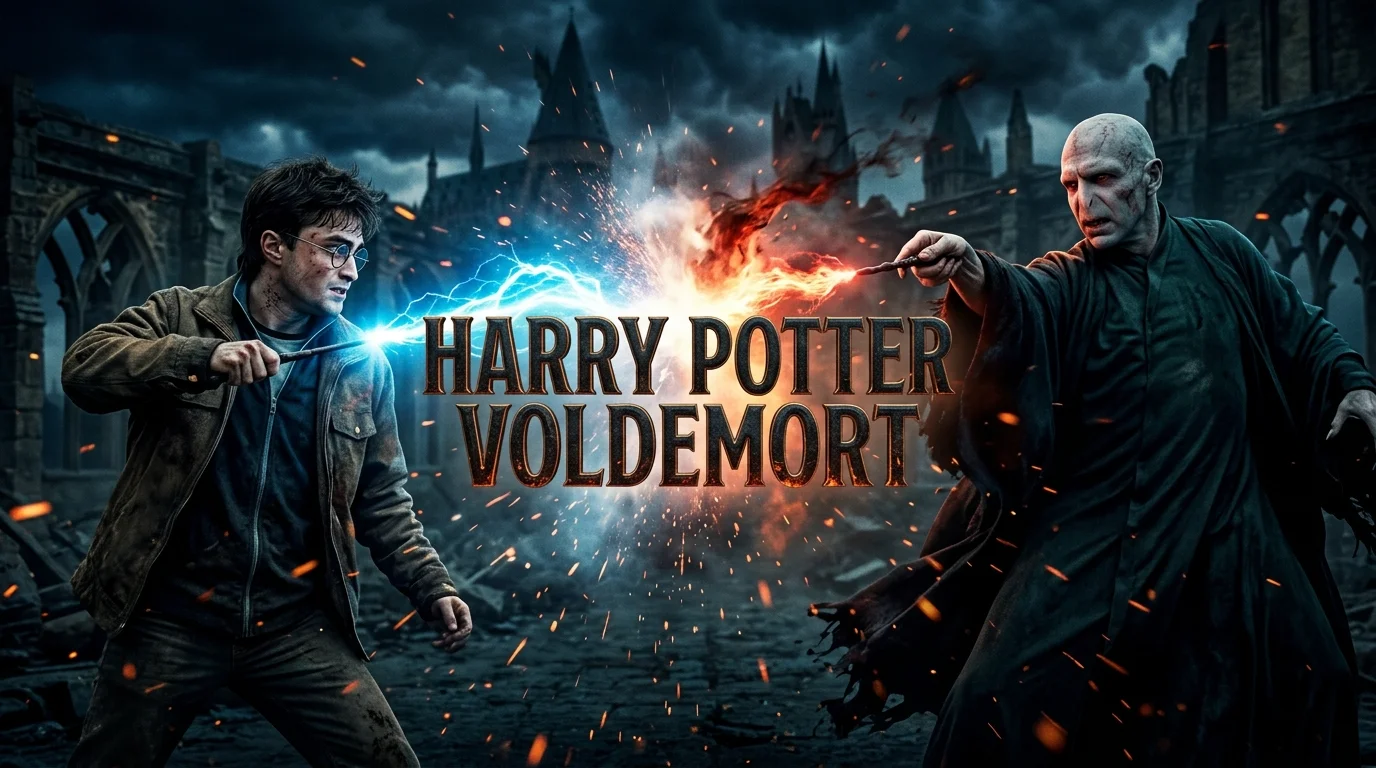
The Harry Potter Voldemort conflict drives almost every major event across the original seven-book story. Their connection begins when Harry is still a baby and becomes deeper through magic, prophecy, and shared abilities. Understanding that relationship also explains the Horcruxes, Harry’s scar, and the Dark Lord’s eventual defeat.
| Key fact | Explanation |
|---|---|
| Original name | Tom Marvolo Riddle |
| Hogwarts house | Slytherin |
| Main goal | Defeat death and gain lasting control |
| Followers | Death Eaters |
| Connection to Harry | Prophecy, scar, linked minds, and an unintended soul fragment |
| Main magical protection | Horcruxes |
| Final conflict | Battle of Hogwarts |
| Film portrayal | Ralph Fiennes portrayed the adult Dark Lord in the main film series |
Tom Riddle becomes Lord Voldemort after rejecting his past and pursuing power through Dark magic. His attempt to kill Harry as a baby backfires because Lily Potter sacrifices herself. That failed attack links the two characters and begins the chain of events that eventually destroys him.
Key Takeaways
* Tom Riddle was a gifted Hogwarts student who later created the Lord Voldemort identity. * He targeted Harry after hearing part of a prophecy about a child who could defeat him. * Lily Potter’s sacrifice protected Harry when the Killing Curse struck him. * A fragment of the attacker’s damaged soul attached itself to Harry unintentionally. * Horcruxes helped him survive physical destruction, but they also created several weaknesses. * His obsession with controlling death influenced many of his worst decisions. * Harry ultimately survives their final confrontation, while the Dark Lord’s curse rebounds.
Who Was Lord Voldemort Before Harry Potter?
Before becoming the feared Dark wizard, he was known as Tom Marvolo Riddle. The official Harry Potter encyclopedia identifies him as an exceptionally powerful wizard and a member of Slytherin House. His abilities included Parseltongue, Legilimency, Dark Arts, and the creation of Horcruxes.
Tom grew up without knowing much about his magical ancestry. He later discovered his connection to Salazar Slytherin through his mother’s family. That heritage mattered because he valued status, magical power, and wizarding superiority.
His new identity also separated him from the ordinary name he disliked. He rearranged the letters of Tom Marvolo Riddle to create “I am Lord Voldemort.” The change reflected his desire to erase his earlier life and construct a more intimidating identity.
Harry Potter Voldemort Connection: Why Did He Target Harry?
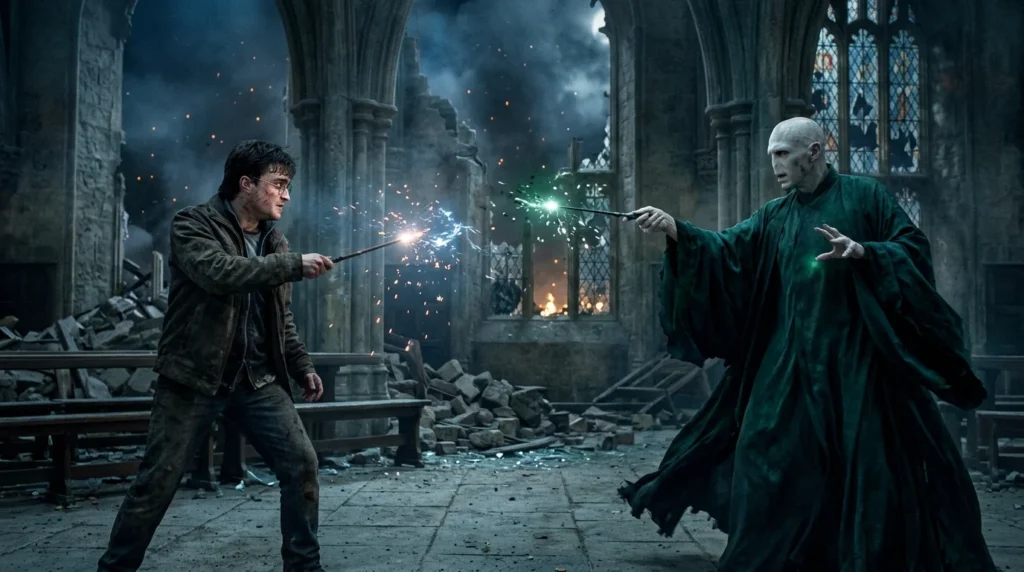
The central connection begins with a prophecy about a child who could defeat the Dark Lord. Harry wasn’t the only child who initially fit its description. Neville Longbottom also matched important parts of the prophecy.
The Dark wizard chose Harry after learning only part of what had been predicted. That decision effectively marked Harry as his rival. The official character encyclopedia describes Harry as the child singled out because of that prophecy.
The attack at Godric’s Hollow changed both lives. Lily Potter refused to stand aside and died protecting her son. Her sacrifice created magical protection that caused the Killing Curse to rebound instead of killing Harry.
Why Did Harry Survive the Killing Curse?
Harry survived because his mother willingly sacrificed herself to protect him. Her choice created an unusual form of protective magic. The curse rebounded against the attacker and destroyed his physical body instead.
Harry received the lightning-shaped scar associated with that night. He also gained abilities and connections that seemed mysterious during his early Hogwarts years. His ability to speak Parseltongue was one of the clearest clues.
The connection went beyond language or dreams. A piece of the attacker’s badly damaged soul attached itself to the child during the failed murder. This happened unintentionally and later became central to the final book.
Was Harry Really a Horcrux?
Harry contained a fragment of the Dark Lord’s soul, although the situation differed from deliberately created Horcruxes. No planned ritual turned Harry into one. The soul fragment attached itself after the Killing Curse rebounded at Godric’s Hollow.
That fragment explains several unusual features of Harry’s experience. He could sometimes sense the other wizard’s emotions and see events through his perspective. Their mental connection became especially important during the later books.
The fragment also created a problem that could not be ignored forever. They needed to destroy it before the Dark Lord could become fully mortal again. Harry eventually entered the Forbidden Forest, knowing he might die.
How Did the Horcruxes Keep the Dark Lord Alive?
A Horcrux contains a fragment of a person’s soul outside the body. Creating one requires an act of murder that damages the soul. Official Wizarding World history says Tom Riddle used several significant objects for this purpose.
His known Horcruxes included the diary, Marvolo Gaunt’s ring, Slytherin’s locket, Hufflepuff’s cup, Ravenclaw’s diadem, and Nagini. Harry also carried an unintended fragment. Each surviving piece made complete destruction more difficult.
The objects were not chosen randomly. Several connected Tom to Hogwarts, famous magical families, or his own ancestry. That emotional attachment later helped Dumbledore predict what items he might have selected.
The Main Horcruxes and How They Were Destroyed
| Horcrux | Connection | How it was destroyed |
|---|---|---|
| Tom Riddle’s diary | His Hogwarts years | Harry used a Basilisk fang |
| Marvolo Gaunt’s ring | His maternal family | Dumbledore used Gryffindor’s sword |
| Slytherin’s locket | Slytherin heritage | Ron used Gryffindor’s sword |
| Hufflepuff’s cup | Hogwarts founder relic | Hermione used a Basilisk fang |
| Ravenclaw’s diadem | Hogwarts founder relic | Destroyed by Fiendfyre |
| Nagini | His snake companion | Neville used Gryffindor’s sword |
| Soul fragment in Harry | Created unintentionally | Destroyed in the Forbidden Forest |
Destroying the Horcruxes required substances or magic powerful enough to damage them beyond repair. Basilisk venom could accomplish this task. Gryffindor’s sword became effective after absorbing Basilisk venom during Harry’s Chamber of Secrets encounter.
Fiendfyre could also destroy a Horcrux because of its extraordinary destructive power. That magic eliminated Ravenclaw’s diadem inside the Room of Requirement. Nagini was later killed during the Battle of Hogwarts.
Why Were Harry and the Dark Lord So Similar?
Both boys entered the magical world after childhoods spent largely outside it. Both could speak Parseltongue, and both developed strong connections to Hogwarts. They also possessed unusually powerful magical abilities.
Their similarities make their choices more important. Harry builds friendships and repeatedly accepts help from other people. Tom treats relationships as tools for gaining control or proving superiority.
Their attitudes toward death create another major contrast. Harry fears losing people but eventually accepts personal sacrifice. His enemy spends much of his life trying to escape death completely.
The Prophecy Did Not Guarantee One Fixed Outcome
The prophecy matters because of how the Dark wizard responds to it. He hears enough information to believe a child could threaten his future. He then tries to eliminate that threat before it can grow.
That choice creates the enemy he feared. By attacking Harry, he gives the child his famous scar and unintentionally creates their magical connection. He also triggers the protection created by Lily’s sacrifice.
This makes the prophecy more than a simple prediction. Characters still make choices throughout the story. Those choices repeatedly determine whether the prediction gains power over their lives.
Why the Elder Wand Could Not Save Him
Later, the Dark Lord seeks the Elder Wand because he believes it can overcome Harry’s defenses. The wand has a reputation for extraordinary power. However, possessing it does not automatically make someone its true master.
Wand allegiance becomes crucial during the final confrontation. The Elder Wand’s loyalty passed from Draco Malfoy to Harry. Its ownership therefore did not match what the attacker believed.
That misunderstanding contributed directly to the ending. Harry explains the wand’s allegiance before the final spell exchange. The Killing Curse then rebounds, ending the conflict at Hogwarts.
How Ralph Fiennes Shaped the Movie Version
Ralph Fiennes portrayed the adult Dark Lord across the later Harry Potter films. His performance emphasized controlled speech, unpredictable anger, and an unsettling physical presence. The character’s snake-like appearance reinforced the separation from Tom Riddle’s earlier human identity.
Several actors represented younger versions of Tom at different ages. This allowed the films to show how the polished Hogwarts student changed over time. Those flashbacks are especially important in Harry Potter and the Half-Blood Prince.
Movie viewers interested in other major cast members can also read NewPapero’s Emma Watson profile. Watson played Hermione Granger throughout all eight original films. NewPapero’s Entertainment section includes more film and celebrity coverage.
Why His Plan for Immortality Failed
His strategy failed partly because dividing the soul created vulnerabilities. Every Horcrux became another object that could eventually be discovered and destroyed. Dumbledore’s research gave Harry and his friends a practical way to remove those protections.
His decisions also relied heavily on assumptions about others. He underestimated sacrificial love, loyalty to wands, friendship, and Harry’s willingness to face death. Those mistakes repeatedly undermined his plans.
The contrast is central to the series. One character seeks security through control, fear, and magical safeguards. Harry survives repeatedly because others choose loyalty, sacrifice, and cooperation.
What Happens in the Final Battle?
Harry eventually learns that the soul fragment inside him must be destroyed. He enters the Forbidden Forest and lets the Killing Curse strike him. The attack destroys the attached fragment rather than permanently ending Harry’s life.
Harry later returns to confront his enemy inside Hogwarts. By then, the remaining Horcruxes have been eliminated. Neville’s destruction of Nagini removes the final external soul fragment.
The last duel ends when the Killing Curse rebounds. The Elder Wand recognizes Harry, not his opponent, as its master. That moment completes the conflict that began years earlier at Godric’s Hollow.
Why the Rivalry Still Defines the Harry Potter Story
The rivalry works because it connects nearly every major theme in the series. It brings together identity, choice, death, friendship, prejudice, courage, and sacrifice. The magical battles matter, but the philosophical differences matter more.
Tom Riddle tries to remove every weakness that makes him human. Harry keeps the relationships and emotions that his enemy considers weaknesses. Those same qualities repeatedly help Harry survive situations that raw magical power cannot solve.
For more entertainment explainers and character features, browse the NewPapero entertainment coverage and its celebrity features. The site also features profiles of actors, television personalities, and major pop culture figures. These articles offer additional context for readers exploring familiar film franchises.
Frequently Asked Questions
What is the Harry Potter Voldemort connection?
Their connection begins when the Dark Lord attacks Harry after hearing part of a prophecy. Lily Potter’s sacrifice causes the Killing Curse to rebound. A damaged soul fragment then attaches to Harry, creating a lasting magical link.
Why did he choose Harry instead of Neville?
Both Harry and Neville matched important details in the prophecy. The Dark wizard personally decided Harry represented the greater threat. That choice effectively made Harry the rival the prophecy described.
Why could Harry speak Parseltongue?
Harry could speak Parseltongue because the failed attack transferred part of his enemy’s magical abilities. The soul fragment inside him created that connection. His ability changed after the fragment was destroyed.
How many Horcruxes were there?
Tom Riddle deliberately created several Horcruxes while trying to divide his soul into multiple pieces. Six deliberate vessels became central to the story, while Harry carried an unintended fragment. The exact count can seem confusing because the soul remaining in the body also matters.
Who killed Lord Voldemort?
He dies during his final confrontation with Harry at Hogwarts. His own Killing Curse rebounds after the Elder Wand refuses to defeat its true master. Harry therefore wins the duel without casting a Killing Curse himself.
Why did Lily Potter’s sacrifice protect Harry?
Lily was given a genuine opportunity to move aside but chose to die protecting her son. That willing sacrifice created protective magic around Harry. The attacker did not understand that protection when he cast the Killing Curse.
Final Takeaway
The story is not simply about one powerful wizard fighting another. It shows how fear of death can shape decisions and create unexpected weaknesses. Tom Riddle’s search for immortality ultimately creates the conditions for his defeat.
Harry succeeds through choices that his enemy consistently dismisses. He trusts friends, accepts sacrifice, and refuses to build his identity around fear. That contrast gives the final battle its meaning beyond the spells exchanged at Hogwarts.