



A torn meniscus does not always require surgery. Many people can reduce pain and regain function through activity changes, exercise, and time. However, the tear’s location, size, and pattern affect whether the tissue itself can heal. If you are researching how to heal a torn meniscus naturally, start with a proper medical assessment. Conservative care works well for many stable tears without knee locking. It is not a substitute for evaluation when symptoms suggest a displaced or serious injury. Direct answer: Some meniscus tears can heal without surgery, especially small tears near the outer blood-rich edge. Recovery usually focuses on reducing irritation, restoring motion, and strengthening the muscles supporting the knee. A locked knee, major swelling, or persistent symptoms should be evaluated by a qualified medical professional.
| Recovery factor | What generally helps | What to avoid early |
|---|---|---|
| Pain and swelling | Relative rest, ice, elevation | Repeated painful activity |
| Knee motion | Gentle, comfortable movement | Forcing deep knee bends |
| Strength | Gradual leg and hip exercises | Heavy loading too soon |
| Daily activity | Controlled walking as tolerated | Pivoting and sudden direction changes |
| Long-term recovery | Progressive exercise | Returning to sport before function returns |
| Medical review | Assessment for persistent symptoms | Ignoring locking or severe instability |
Can a Torn Meniscus Really Heal Without Surgery?
The answer depends on what you mean by “heal.” Some tears can biologically repair because blood reaches the injured area. Other tears may remain visible but become painless and functional with rehabilitation. The meniscus has a better blood supply near its outer edge. Tears in this region have greater healing potential than tears deeper inside. Age, tear pattern, associated injuries, and knee health also influence recovery. Conservative treatment is often reasonable when symptoms remain manageable and the knee moves normally. Mayo Clinic notes that treatment commonly begins without surgery, depending on tear characteristics. Tears without locking may become less painful over time. MedlinePlus notes that each knee has 2 menisci, and that cartilage becomes more brittle and easier to tear with age.
What You’ll Need for Conservative Recovery
You do not need complicated equipment to begin protecting an injured knee. You do need patience, appropriate exercise, and realistic expectations. A clinician or physical therapist can help tailor activity to your specific tear. Useful basics include the following.
* A reusable cold pack wrapped in cloth. * Supportive footwear. * A comfortable place for rehabilitation exercises. * Optional compression, when recommended. * Access to a physical therapist or sports medicine clinician. * A simple way to track pain, swelling, and activity.
Readers interested in broader wellness topics can also browse Newpapero’s Health section. Athletes can explore the site’s Sports section for additional sports-related reading.
How to Heal a Torn Meniscus Naturally: 7 Practical Steps
1. Stop the Movements That Keep Irritating the Knee
Reduce movements that sharply increase pain during the early recovery period. Twisting, pivoting, deep squatting, and sudden direction changes commonly place more stress on an irritated meniscus. Rest does not mean remaining completely inactive for weeks. Mayo Clinic recommends avoiding activities that aggravate knee pain, particularly twisting and pivoting. Temporary crutch use may help when walking is painful. Your activity level should increase as symptoms settle.
2. Use Cold Therapy for Pain and Swelling
Cold therapy can temporarily reduce pain and swelling after an injury. Place a wrapped cold pack over the knee instead of putting ice directly on skin. Keep each session brief and monitor the skin. Mayo Clinic suggests applying cold for about 15 minutes at a time initially. The knee can also be elevated during this period. Cold therapy manages symptoms but does not reconnect torn cartilage by itself.
3. Restore Comfortable Knee Motion
A painful knee can become stiff when movement stops completely. Gentle bending and straightening can help preserve comfortable motion. Never force the knee through sharp pain or a mechanical block. Movement should remain controlled and within a tolerable range. Increasing motion gradually is usually safer than pushing aggressively. A therapist can adjust exercises if swelling increases afterward.
4. Strengthen the Muscles Supporting Your Knee
Stronger muscles can improve joint control and reduce stress during everyday movement. Rehabilitation commonly targets the quadriceps, hamstrings, hips, and surrounding muscles. The correct starting exercise depends on your current pain and function. Physical therapy is a recognized non-surgical treatment for meniscus injuries. AAOS and Mayo Clinic both describe strengthening or therapy as part of conservative management. These exercises can support the knee even when the tear itself has limited blood supply. For degenerative tears, research also supports exercise-based care. A five-year randomized trial found physical therapy was not inferior to partial meniscectomy for knee function. The study involved adults aged 45 to 70 with degenerative meniscal tears.
5. Return to Walking and Daily Activity Gradually
Walking is not automatically harmful after every meniscus injury. The better question is whether walking causes increasing pain, swelling, catching, or instability. Shorter and easier sessions may be appropriate before longer walks. Increase activity based on your knee’s response later that day and the next morning. Reduce the load if swelling repeatedly rises after exercise. Avoid testing recovery with sudden running or cutting movements. Progress can vary considerably between people. Some knees improve within weeks, while others need several months of rehabilitation. Tear type and underlying arthritis can change the timeline.
6. Support Recovery With Adequate Nutrition and Sleep
No specific food has been proven to reconnect a torn meniscus. Your body still needs adequate calories, protein, vitamins, minerals, and fluids during tissue recovery. A balanced eating pattern is more useful than relying on a single “healing” ingredient. Include protein sources, fruits, vegetables, whole grains, and healthy fats according to your dietary needs. Maintaining an appropriate body weight may also reduce unnecessary knee loading. Avoid supplements that promise to regenerate cartilage without convincing clinical evidence. Sleep also supports normal recovery processes and exercise performance. Keep a consistent sleep routine when possible. Persistent pain that prevents sleep deserves medical attention rather than endless home remedies.
7. Progress Rehabilitation Before Returning to Sport
Feeling less pain does not always mean the knee is ready for sport. Athletic activity requires strength, balance, coordination, and tolerance for repeated loading. These abilities should return progressively. Start with controlled movements before adding faster or more demanding exercises. Running, jumping, and pivoting generally come later than basic walking and strengthening. Sport-specific rehabilitation is safest when guided by a qualified professional. Return too quickly and symptoms may flare again. A gradual progression also makes it easier to identify which movement causes trouble. Your goal should be reliable function, not simply completing a certain number of recovery days.
Does Physical Therapy Help a Torn Meniscus?
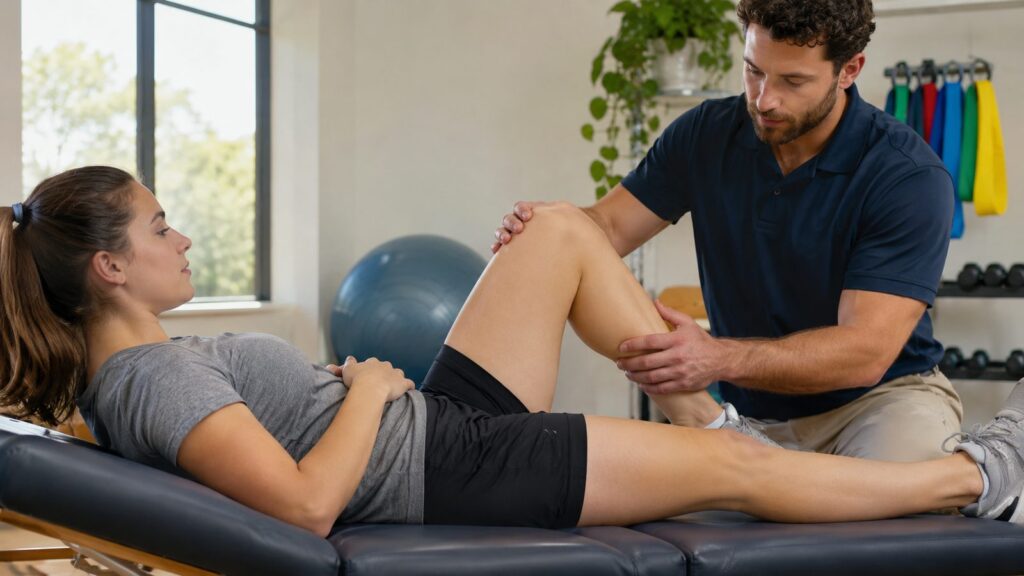
Exercise-based rehabilitation can improve knee strength and function without changing every tear anatomically. This distinction matters because pain relief does not always require the MRI appearance to become normal. Treatment should focus on your symptoms and functional goals. Evidence is especially strong for many degenerative meniscal problems. A five-year randomized trial found exercise-based physical therapy remained comparable with arthroscopic partial meniscectomy for patient-reported function. Researchers concluded physical therapy should be preferred for degenerative tears in that study population. A 2025 U.S. trial also studied adults with osteoarthritis and degenerative tears. A structured home exercise program produced similar pain outcomes to adding supervised physical therapy at three months. That finding supports exercise, while also showing that supervision may not benefit every patient equally.
What Are Signs That Conservative Treatment Is Working?
Improvement usually appears as better function rather than one dramatic change. Pain may become less frequent during walking, stairs, and routine movement. Swelling should also become easier to control. You may notice that bending and straightening feel smoother. Your leg may tolerate more exercise before symptoms appear. Daily tasks should gradually require less compensation from the other leg. Progress is rarely perfectly linear. A more active day can temporarily increase soreness without meaning treatment has failed. Repeated deterioration, locking, or worsening instability deserves reassessment.
When Should You See a Doctor About a Meniscus Tear?
Seek medical assessment when the knee cannot move normally after an injury. MedlinePlus lists locking or catching of the knee and difficulty squatting among typical meniscus tear symptoms. A knee that locks or feels mechanically blocked may require more urgent evaluation. AAOS notes that tears limiting knee motion can be candidates for surgical treatment. You should also get prompt care after major trauma, severe swelling, or difficulty bearing weight. Increasing redness, fever, or severe unexplained swelling should not be treated as routine rehabilitation soreness. New calf swelling or shortness of breath also needs urgent medical attention. Persistent symptoms deserve evaluation even without an emergency. A clinician can examine the knee and decide whether imaging is useful. MRI is commonly used when confirmation of a meniscus tear is necessary.
When Might Surgery Be Necessary?
Non-surgical treatment does not work for every tear. Surgery may be considered when rehabilitation fails or a displaced tear prevents normal knee movement. The decision should reflect symptoms, tear pattern, age, activity needs, and joint condition. Preserving meniscal tissue is generally preferred when surgery becomes necessary. AAOS guidance emphasizes saving as much functional meniscus as possible. This approach helps preserve the tissue’s role in load distribution and knee stability. Surgery should not be treated as either an automatic failure or an automatic first choice. Conservative care and surgery solve different problems. The correct path depends on the individual knee.
Frequently Asked Questions
Can you completely heal a torn meniscus naturally?
Some small tears near the outer blood-supplied region can heal without surgery. Tears in poorly supplied areas have less ability to biologically repair. Even then, rehabilitation may reduce symptoms and restore useful knee function.
How long does a meniscus tear take to feel better?
There is no universal recovery deadline. Mild injuries may improve within several weeks, while rehabilitation can continue for months. Your tear type, symptoms, age, arthritis, and activity demands affect the timeline.
Will walking on a torn meniscus make it worse?
Walking may be tolerated when it does not increase pain, swelling, catching, or instability. Long or demanding walks can exceed the knee’s current capacity. Use your symptoms and professional guidance to determine an appropriate amount.
Can exercises make a meniscus tear worse?
Exercises can aggravate symptoms when they are too difficult or introduced too quickly. Controlled rehabilitation should progress from tolerable movements toward greater strength and function. Stop and seek guidance if an exercise causes sharp pain, locking, or substantial swelling.
What is the fastest way to heal a torn meniscus naturally?
There is no proven shortcut that guarantees tissue healing. The safer approach combines activity modification, symptom control, gradual motion, and progressive strengthening. Medical assessment is important when symptoms suggest a tear that may need repair.
The Bottom Line
Many people with meniscus tears can begin with non-surgical care. Relative rest, cold therapy, controlled movement, and progressive strengthening can reduce symptoms and restore function. Research supports exercise-based treatment for many degenerative tears. Natural recovery does not mean avoiding medical care. Some tear patterns have limited healing potential, while locked knees may need prompt specialist attention. A good recovery plan matches treatment to the tear instead of promising that every injury can heal itself. If knee pain is persistent, worsening, or limiting normal movement, arrange an evaluation with a sports medicine clinician, physical therapist, or orthopedic specialist. Use home care to support an appropriate treatment plan, not to delay necessary diagnosis. That approach gives your knee the best chance to recover safely. —