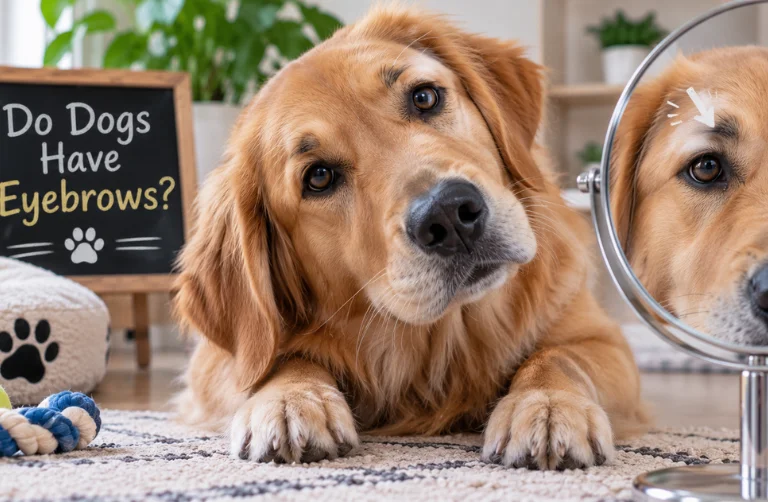
The short answer to “do dogs have eyebrows?” is yes and no. Dogs lack the narrow hair strips humans call eyebrows. Still, they have brow muscles, coat markings, and sensory hairs that create familiar eyebrow-like expressions.
| Question | Quick answer |
|---|---|
| Human-style eyebrows? | No distinct eyebrow strip like a person has. |
| Brow muscles? | Yes, including muscles that can raise the inner brow. |
| Hair above the eyes? | Both regular coat hair and specialized whiskers can appear there. |
| Why the expressive look? | Facial muscles, eye shape, fur patterns, and movement work together. |
| Can brow whiskers be trimmed? | Routine trimming is discouraged because whiskers provide sensory input. |
| Common “eyebrow” breeds? | Dobermans, Rottweilers, and Schnauzers are familiar examples. |
Direct answer: Dogs do not have human-style eyebrows. They do have brow muscles, fur patterns, and sensitive whiskers above their eyes. These features create eyebrow-like expressions. One inner-brow muscle is especially developed in domestic dogs, helping produce the wide-eyed look people often call “puppy-dog eyes.”
Key Takeaways
- Canine brows are not the same structure as human eyebrows.
- Muscles above the eyes help create expressive inner-brow movements.
- Some breeds have colored patches or long furnishings that resemble eyebrows.
- Whiskers above the eyes are sensory hairs and should not be routinely cut.
- Read brow movement with the dog’s whole body, rather than assigning one emotion.
Do Dogs Have Eyebrows Like Humans?
Human eyebrows are distinct strips of hair above the eyes. A dog’s face doesn’t organize hair the same way. What looks like an eyebrow usually comes from fur, muscle movement, whiskers, or contrasting coat color. That distinction matters because each feature has a different job. Fur mainly covers and protects the skin. Facial muscles and sensory whiskers contribute more directly to expression and environmental awareness.
What Creates the Eyebrow Look on a Dog?
Three features can make dog eyebrows seem surprisingly human. Facial muscles move the skin above the eyes. Coat patterns can add dark or rust-colored spots that look like fixed brows. Dogs also have specialized whiskers above their eyes. These are called supraciliary or supraorbital whiskers. Their follicles are highly sensitive, helping dogs detect nearby objects and movement.
Why Can Dogs Make “Puppy-Dog Eyes”?
A 2019 anatomy study compared facial muscles in domestic dogs and gray wolves. Researchers focused on the levator anguli oculi medialis, or LAOM. This muscle raises the inner eyebrow area and makes the eyes appear larger. The researchers found a strong LAOM in the dogs they examined, with one noted breed exception. Wolves in the anatomy sample lacked the same well-developed structure. Behavioral testing also found stronger inner-brow movements in dogs than wolves.
The authors proposed that domestication helped shape this facial communication system. Dogs producing appealing expressions may have received more human attention or care. That idea is plausible, but it remains an evolutionary interpretation rather than a dog’s conscious strategy.
What Do Eyebrow Movements Mean?
An eyebrow raise can be part of a dog’s social expression. It may appear during attention, curiosity, uncertainty, or interaction with a person. One brow movement alone cannot prove a specific emotion. Read the whole body before deciding what your dog feels. Check the ears, mouth, posture, tail, movement, and surrounding situation. A relaxed body tells a different story from a stiff body with forward-focused attention.
This approach also reduces accidental anthropomorphism. People naturally read human meanings into familiar facial shapes. Dogs communicate with facial movement, but their signals do not map perfectly onto human expressions.
Which Breeds Have the Most Noticeable Eyebrow-Like Features?
Some breeds have coat markings that create fixed-looking brows. Dobermans can have sharply defined rust markings above each eye. Rottweilers also have contrasting rust-to-mahogany facial markings that can emphasize the brow area. Schnauzers create the effect differently. Their wiry facial furnishings form arched or bushy brows above the eyes. American breed standards describe these eyebrows as a hallmark of the Schnauzer appearance.
Coat texture can also change how visible the brow area seems. Curly-coated dogs may show softer or less defined brow furnishings. Newpapero’s Miniature Poodle guide explains how coat type and grooming shape a dog’s appearance.
Are Eyebrow Whiskers the Same as Eyebrow Hair?
No, the long, stiff hairs above the eyes are specialized whiskers. They differ from ordinary coat hair in structure and sensory function. Their follicles contain dense nerve and blood-vessel connections that relay touch information. These whiskers can react to air movement or nearby objects. They may also trigger protective responses around the eyes. That function makes them more important than decorative facial hair.
Regular brow furnishings can be shaped during breed-specific grooming. Sensory whiskers deserve different treatment because they serve a functional role. A professional grooming overview for Miniature Poodles can help separate cosmetic coat care from whisker care.
Should You Trim a Dog’s Eyebrow Whiskers?
Routine trimming of facial whiskers is generally discouraged. Veterinary sources describe whiskers as important sensory structures. Cutting them may temporarily reduce the information a dog receives around its face. Cutting the hair shaft itself is not the same as pulling a whisker. The shaft does not contain the sensitive nerves found in the follicle. Plucking can be painful and should not be treated like ordinary grooming.
If facial hair blocks vision, ask a veterinarian or experienced groomer for guidance. They can identify ordinary coat hair versus functional whiskers. This is especially useful for dogs with dense facial furnishings or complex grooming needs.
When Should Changes Around the Brow Area Concern You?
A cosmetic difference is usually easy to spot from your dog’s normal appearance. Sudden hair loss, broken whiskers, swelling, redness, or discharge deserve more attention. Persistent changes can accompany skin, eye, or follicle problems. Don’t diagnose a health problem based on eyebrow appearance alone. Watch for rubbing, squinting, pain, or behavioral changes. If symptoms persist, a veterinarian can examine the eye and surrounding skin.
The Bottom Line for Dog Owners
Dog eyebrows are best understood as a combination of anatomy, coat, and sensory hair. Their expressive look is real, even though the structures differ from human eyebrows. Watching the whole face and body gives you better context. Protect the whiskers, avoid reading one expression as a guaranteed emotion, and notice sudden physical changes.
For more owner-focused guides, browse Newpapero’s Pets section. That gives you a practical next step without turning a cute expression into a medical or behavioral diagnosis.
Frequently Asked Questions
Do dogs have eyebrows on every breed?
Every breed has a brow area and facial muscles around the eyes. The visible effect differs because coats, markings, skull shapes, and grooming vary. Some dogs therefore look far more “eyebrowed” than others.
Are the hairs above a dog’s eyes whiskers?
Some of them are, especially the longer, stiff hairs called supraorbital or supraciliary whiskers. Ordinary coat hair can grow in the same region. The sensory hairs are thicker and connected to specialized follicles.
Can dogs control their eyebrow movements?
Dogs can move facial muscles that affect the brow area. Research shows these movements occur during social interaction with humans. That does not prove dogs consciously raise their brows to manipulate people.
Did domestication change canine eyebrow muscles?
Research supports anatomical differences between domestic dogs and wolves around the inner brow. Scientists have linked those differences to communication during domestication. The exact evolutionary pathway cannot be reconstructed with complete certainty.