

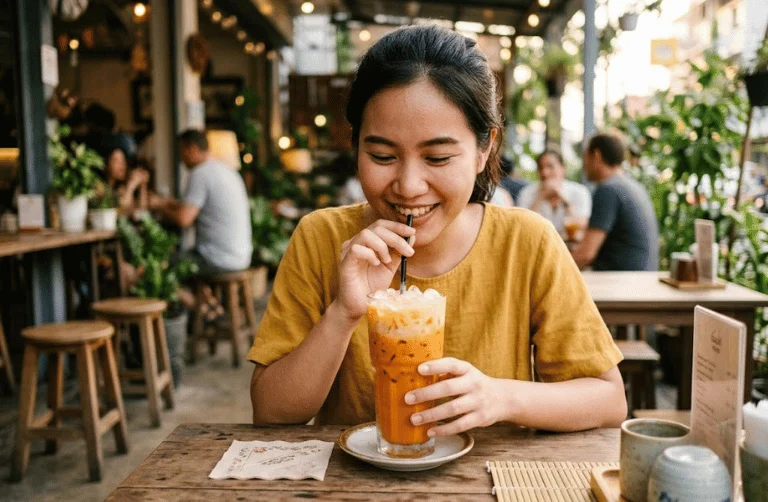
If you’re wondering how much caffeine is in Thai iced tea, a practical estimate is 20 to 60 milligrams per 8-ounce serving. The exact amount depends on the tea blend, brewing strength, serving size, and amount of tea concentrate used.
Direct answer: Thai iced tea usually contains about 20 to 60 milligrams of caffeine per 8-ounce serving. The range is broad because recipes use different black tea blends, brewing strengths, and amounts of concentrate. A larger cup may not contain twice as much caffeine because ice, milk, and sweetener can add volume without adding caffeine.
Caffeine in Thai Iced Tea at a Glance
| Drink or serving | Approximate caffeine | What to know |
| Typical 8-ounce Thai iced tea | 20–60 mg | Depends on the tea blend and brewing method |
| Brewed black tea, 8 ounces | 48 mg | A useful reference for the tea base |
| Brewed green tea, 8 ounces | 29 mg | Usually contains less caffeine than black tea |
| Brewed coffee, 8 ounces | 96 mg | Contains about twice as much caffeine as standard black tea |
| Decaffeinated black tea, 8 ounces | 2 mg | Not completely caffeine-free |
The Thai iced tea estimate comes from common recipe-based ranges rather than a single universal laboratory measurement.
Key Takeaways
- The caffeine comes from the brewed black tea base.
- Milk, sugar, ice, and plain tapioca pearls do not increase the caffeine content.
- Cup size alone does not reveal how much caffeine a drink contains.
- A strong concentrate may contain more caffeine than a larger but weaker drink.
- Coffee usually contains more caffeine than Thai iced tea in an equal serving.
Readers looking for more ingredient and beverage explainers can browse Newpapero’s Food section.
How Much Caffeine Is in Thai Iced Tea by Serving Size?
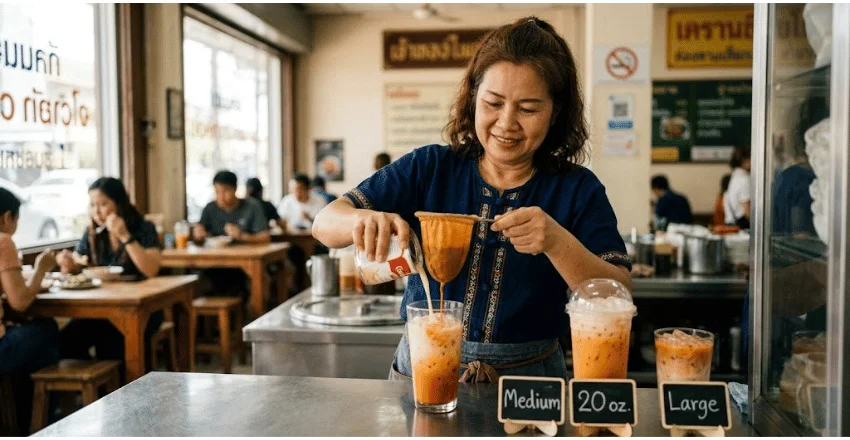
An 8-ounce glass commonly contains between 20 and 60 milligrams of caffeine. Restaurant portions, however, often come in 12-, 16-, or 20-ounce cups. This does not mean the caffeine content increases in direct proportion to the size of the cup. A small Thai iced tea may contain several ounces of strong tea combined with milk and ice. A 16-ounce version might use the same amount of concentrate but include more ice. Another restaurant may double the amount of tea used in its larger size.
For this reason, a large Thai iced tea may remain within the standard range or contain closer to 100 milligrams. A higher estimate is reasonable only when the larger drink includes substantially more brewed tea. This explains why estimates of the caffeine content in Thai iced tea can vary across menus and nutrition guides. Recipes are not standardized, and most restaurants do not publish laboratory measurements.
A Simple Way to Estimate Homemade Servings
Check the caffeine information on the tea package when it is available. Then use this calculation:
Caffeine per tea bag × number of tea bags ÷ number of servings
Suppose each tea bag contains about 40 milligrams of caffeine. If you use four bags to prepare four drinks, each serving will contain roughly 40 milligrams. Milk, sugar, water, and ice will change the drink’s volume but not its total caffeine content. This calculation is still only an estimate. The amount of tea, water temperature, and brewing time can affect how much caffeine enters the water.
Why the Caffeine Content Varies
Several brewing choices determine the final amount of caffeine.
Type of Tea
Most recipes use black tea, often an Assam-style or Ceylon-style blend. Black tea naturally contains caffeine, but the amount varies among tea leaves, growing conditions, processing methods, and products.
Some packaged Thai tea blends also contain spices, flavorings, or coloring. These additions create the familiar taste and appearance, but they are not the main sources of caffeine.
Amount of Tea
Using more tea leaves or tea bags creates a stronger concentrate. It also places more caffeine-containing material in the water. Two cafés can use the same glass size yet serve drinks with different caffeine levels. One may prepare a mild brew, while another uses a concentrated base designed to remain flavorful after dilution.
Brewing Time and Temperature
Hot water extracts caffeine from tea leaves. Longer brewing times and higher temperatures may increase extraction, although the final amount also depends on the tea product and the quantity of leaves used. A longer steeping time can also produce a bitter or astringent flavor. Cafés may balance that stronger taste by adding more condensed milk or sugar.
Amount of Concentrate in the Glass
The final drink may contain tea, dairy, sweetener, water, and ice. Only the caffeinated ingredients contribute to the caffeine content. A tall glass containing six ounces of brewed tea may provide less caffeine than a smaller drink made almost entirely from strong tea concentrate.
Thai Iced Tea Caffeine Compared With Other Drinks
Comparing equal 8-ounce portions makes the differences easier to understand.
| Beverage | Approximate caffeine per 8 ounces |
| Thai iced tea | 20–60 mg |
| Brewed black tea | 48 mg |
| Brewed green tea | 29 mg |
| Cola | 33 mg |
| Brewed coffee | 96 mg |
| Energy drink | 79 mg |
Coffee usually contains more caffeine than Thai iced tea. Green tea and cola may contain less, although individual products vary. Energy drinks also differ widely and may include other stimulants. This comparison helps explain why Thai iced tea may feel milder than coffee. Still, a strong or oversized serving can deliver a noticeable amount of caffeine, especially if you rarely consume it.
Do Milk, Sugar, Ice, or Boba Affect the Caffeine Content?
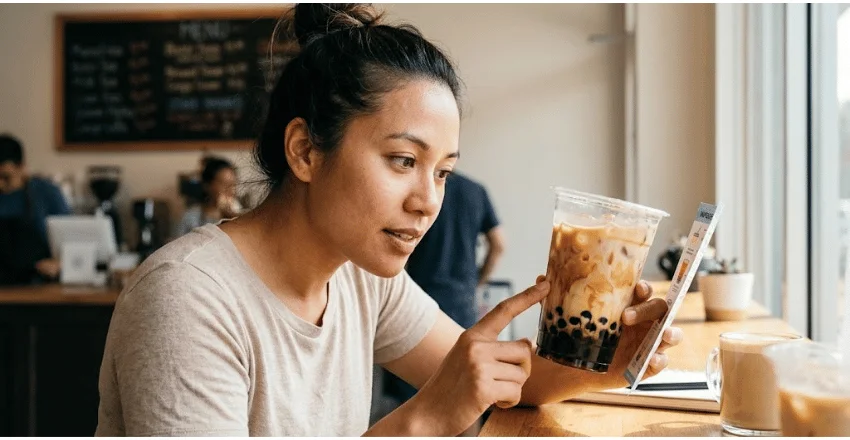
How Much Caffeine Is in Thai Iced Tea? Milk and sweetened condensed milk do not remove caffeine from brewed tea. They dilute the concentration per ounce because they increase the drink’s total volume, but the original amount of caffeine remains in the glass. Sugar does not neutralize caffeine. It can make the drink taste less bitter, which may make the strength of the tea base less noticeable.
Ice adds water as it melts. It lowers the concentration of caffeine in each sip but does not remove caffeine that was already extracted during brewing. Plain tapioca pearls do not contain a meaningful amount of caffeine. The tea base remains the primary source of caffeine in a boba version. Coffee jelly, chocolate toppings, and other caffeinated additions can increase the total.
Who Should Pay Closer Attention?
Up to 400 milligrams of caffeine per day is generally considered an acceptable amount for most healthy adults. Individual sensitivity varies, so one person may experience restlessness or sleep problems after consuming a much smaller amount. People who feel nervous, restless, or unable to sleep after drinking tea should consider choosing a smaller portion or consuming it earlier in the day. Caffeine from other sources also counts, including coffee, soda, energy drinks, chocolate, and certain medicines.
During pregnancy, healthcare professionals often advise limiting caffeine intake to less than 200 milligrams per day. Personal medical advice should come from a qualified clinician who knows your health history. The newspapero Health section provides additional wellness-related articles.
How to Make Thai Iced Tea With Less Caffeine

You can reduce the caffeine content without removing the drink’s creamy texture.
- Use decaffeinated black tea. An 8-ounce serving of decaffeinated tea may still contain about 2 milligrams of caffeine.
- Mix regular and decaffeinated tea. A half-caffeinated blend can preserve more of the traditional tea flavor.
- Use fewer tea leaves or bags. Less tea usually means less caffeine is available for extraction.
- Prepare a smaller serving. This approach works when the smaller drink uses proportionally less concentrate.
- Ask how the café prepares each size. Find out whether larger cups receive more tea or simply contain more milk and ice.
- Choose a caffeine-free herbal base. The flavor will differ, but rooibos can create a creamy, spiced alternative.
Reducing the amount of sweetener will not lower the caffeine content. It can, however, help reduce the drink’s sugar content. For other practical everyday topics, visit Newpapero’s Lifestyle section.
The Practical Answer
How Much Caffeine Is in Thai Iced Tea? A typical glass of Thai iced tea contains 20 to 60 milligrams of caffeine, but no single measurement applies to every recipe. The amount of brewed tea matters more than the final cup size. For a closer estimate, check the tea package, ask the café how much concentrate it uses, or prepare the drink at home. These methods provide more useful information than judging the caffeine content by the drink’s sweetness, color, or cup size.
Frequently Asked Questions
A common estimate is 20 to 60 milligrams per 8-ounce serving. Strong concentrates, additional tea leaves, and larger quantities of brewed tea can increase the total.
Usually not. Brewed coffee generally contains about 96 milligrams of caffeine per 8 ounces, while brewed black tea contains about 48 milligrams. Recipes vary, so a strong, large Thai iced tea could contain an amount similar to that in a small coffee.
It can be made with decaffeinated black tea or a caffeine-free herbal substitute. Decaffeinated tea may still contain a small amount of caffeine, so check the product label if you need to avoid it completely.
No. The orange color may come from the tea blend, spices, flavorings, or added coloring. Color is not a reliable indicator of caffeine content.
The terms often describe closely related drinks made with brewed tea, dairy, and sweetener. Serving styles and recipes vary, but both drinks usually contain caffeine when prepared with black tea.
That depends on your caffeine sensitivity, serving size, and total daily intake. Choose an earlier serving or a decaffeinated version if caffeinated tea tends to disturb your sleep.

