If Soft Classic Kibbe describes your style direction, balance should always come before decoration. Your strongest outfits combine moderate proportions with gentle curves, smooth fabrics, and polished details. The result feels graceful without becoming stiff, oversized, or excessively romantic.
Direct answer: Soft Classic styling centers on balanced proportions softened by gentle curves and refined details. Choose softly tailored clothing, smooth fabrics, subtle waist definition, rounded shapes, and moderate accessories. Avoid extreme silhouettes, bulky layers, severe geometry, and excessive ornament because they can overpower the balanced effect.
David Kibbe created his Image Identity System as an alternative to dressing around perceived body flaws. His approach focuses on emphasizing individual characteristics rather than hiding them. The system has since inspired a large online style community in the United States and elsewhere.
| Style Element | Best Direction | Usually Less Harmonious |
|---|---|---|
| Silhouette | Balanced, softly shaped | Oversized or extremely fitted |
| Jackets | Light tailoring, gentle waist shaping | Boxy or sharply structured |
| Tops | Smooth, draped, refined | Stiff shirts or heavy ruffles |
| Skirts | Flowing, tapered, softly A-line | Extreme volume or harsh geometry |
| Pants | Clean, moderate, softly tailored | Baggy or aggressively angular |
| Fabrics | Silk, crepe, fine knits, soft wool | Heavy, rough, rigid textures |
| Shoes | Refined, moderate, gently shaped | Chunky or highly dramatic |
| Jewelry | Delicate to moderate | Oversized statement pieces |
| Color | Blended or coordinated | Severe color blocking |
What Is the Soft Classic Kibbe Type?
The Soft Classic Kibbe identity combines overall balance with an added sense of softness. Proportions tend to read as moderate rather than obviously elongated, broad, petite, or sharply angular. Rounded elements support that balance rather than dominate it.
Modern style guides consistently describe this identity through soft tailoring, gentle draping, smooth fabrics, and restrained detail. The shared idea is moderation, not strict femininity or formal dressing. Current guides also emphasize that balance remains more important than adding romantic decoration.
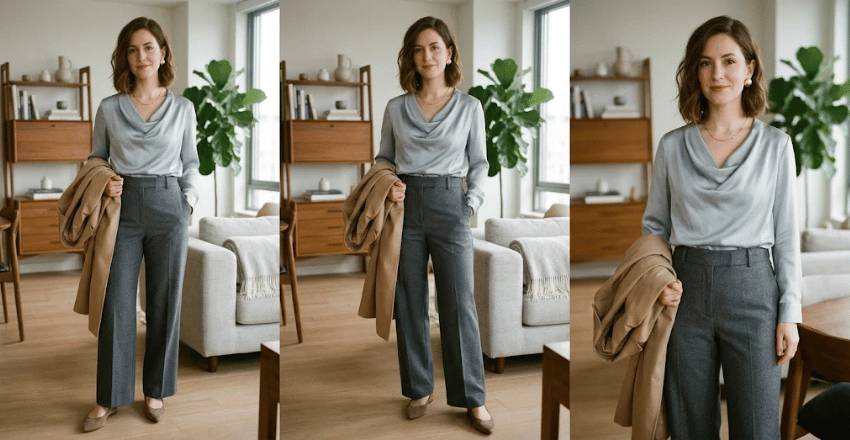
This distinction matters because “soft” does not mean loose, frilly, or shapeless. It means reducing harsh edges while keeping a controlled silhouette. A draped blouse with tailored trousers often illustrates the principle better than a heavily ruffled dress.
The Main Style Rule: Balance First, Softness Second
Think of every outfit as having a visual volume control. Extreme width, extreme sharpness, or excessive decoration can become louder than your natural balance. Moderate shapes keep the whole outfit visible instead of letting one feature take over.
Softness then appears through fabric, curved edges, subtle waist shaping, and refined accessories. You do not need every piece to look traditionally feminine. A simple trouser outfit can work beautifully when the materials and proportions remain gentle.
This approach also makes the wardrobe easier to adapt to American lifestyles. Office clothes, weekend denim, event dresses, and casual layers can follow the same visual logic. You are building a repeatable framework rather than collecting costume-like outfits.
9 Soft Classic Style Rules That Make Dressing Easier
1. Keep silhouettes moderate
Choose clothing that follows your proportions without squeezing or overwhelming them. Moderate jackets, trousers, skirts, and dresses usually create more harmony than extremes. The outfit should look intentional without appearing heavily engineered.
2. Add gentle waist definition
Waist definition can come from shaping, seaming, a soft tuck, or a light belt. It doesn’t require a tightly cinched waist or a dramatic hourglass effect. Aim for a visible transition through the torso instead of severe compression.
3. Choose smooth, responsive fabrics
Silk, crepe, fine jersey, soft wool, cashmere, and lightweight knits often support gentle movement. These fabrics can hold a clean shape without appearing rigid. Rough or bulky materials may add more visual weight than the outfit needs.
4. Soften sharp edges
Rounded collars, curved lapels, scoop necklines, gentle V-necks, and softly shaped handbags fit this direction well. You can still wear structured pieces as long as their edges stay controlled. The goal is refinement, not eliminating all geometry.
5. Keep details proportional
Small or medium details usually integrate more easily than oversized embellishments. Think subtle pleating, delicate buttons, refined jewelry, or a restrained print. Too many focal points can make an otherwise balanced outfit feel busy.
6. Use color to keep the outfit connected
Tonal combinations make an easy starting point because they create a smooth visual flow. Navy with dusty blue or camel with cream can feel polished without appearing severe. High contrast can still work when the shapes and accessories stay moderate.
7. Favor refined shoes
Rounded pumps, almond-toe flats, streamlined loafers, elegant ankle boots, and simple sandals are useful choices. They give an outfit a finished appearance without becoming the dominant feature. Extremely heavy platforms or bulky sneakers may require more careful styling.
8. Keep accessories polished
Pearls, fine chains, small hoops, subtle drop earrings, and medium-scale bags often suit this style direction. Accessories should support the outfit rather than become its entire message. One refined focal point is usually enough.
9. Judge the complete outfit
Individual clothing items do not have permanent Kibbe identities. A blazer that seems too sharp alone may work with softer trousers and accessories. Evaluate the head-to-toe impression rather than treating recommendations as rigid shopping rules.
Easy Outfit Formulas for U.S. Wardrobes
You do not need a closet full of specialized clothing to test these principles. Start with pieces that already fit your daily schedule. The following combinations cover common American work, weekend, and social settings.
- Work: draped blouse + softly tailored trousers + loafers + delicate earrings.
- Business casual: fine knit + knee-length skirt + light blazer + low pumps.
- Weekend: clean straight jeans + fitted cardigan + refined flats + small shoulder bag.
- Brunch: softly shaped midi dress + cropped cardigan + simple sandals.
- Dinner: draped dress + understated jewelry + medium heel + compact clutch.
- Cold weather: fine sweater + tailored coat + straight trousers + sleek ankle boots.
- Warm weather: smooth sleeveless top + flowing midi skirt + minimal sandals.
Denim can fit this approach when the wash and construction remain clean. Straight, slim-straight, or gently bootcut jeans can create a moderate base. Distressing, extreme width, or heavy hardware may shift attention away from the outfit’s softer balance.
For more ideas beyond this system, browse more fashion inspiration on Newpapero and its broader lifestyle coverage. Readers exploring stronger alternative aesthetics can also compare these principles with Newpapero’s guide to different goth styles. Those contrasts can make your own preferences easier to recognize.
Fabrics, Necklines, and Patterns to Try
Fabric can change the effect of the same silhouette. A stiff oversized cotton shirt behaves differently from a soft blouse with gentle draping. Look for materials that move while maintaining enough structure to appear polished.
Useful necklines include scoop, soft V, sweetheart, rounded, and softly draped designs. The neckline should frame the face without creating a severe geometric break. Extremely rigid collars or highly exaggerated shapes may need balancing elsewhere.
Patterns generally work best when their scale remains controlled. Watercolor florals, subtle dots, soft geometrics, and understated prints are practical starting points. You can wear stronger prints when the rest of the outfit stays relatively quiet.
Soft Classic Kibbe vs. Soft Natural and Dramatic Classic
Confusion often happens because neighboring identities can share individual traits. The difference becomes clearer when you compare the main visual priority. One identity may emphasize balance, while another prioritizes width, vertical, or sharpness.
| Identity | Main Visual Direction | Clothing Approach |
|---|---|---|
| Soft Classic | Balance with added softness | Refined shaping and gentle curves |
| Soft Natural | Width with softness | Relaxed shapes and freer draping |
| Dramatic Classic | Balance with added sharpness | Sleeker tailoring and cleaner geometry |
A Soft Natural direction generally allows more relaxed construction and openness. Dramatic Classic styling introduces a sharper, more streamlined edge. The softer Classic direction stays between those effects and keeps symmetry central.
Do not decide your identity from one body feature or one celebrity comparison. Look at the complete visual impression and how different clothing lines behave on you. Testing several outfits often provides more useful information than analyzing isolated measurements.
Common Styling Mistakes
The first mistake is treating “classic” as a requirement for conservative dressing. Balanced dressing can be modern, casual, colorful, or youthful. What matters is proportion and visual control, not whether the clothing looks traditional.
Another mistake is adding too much romantic detail because the identity includes softness. Layers of ruffles, tiny bows, ornate lace, and multiple decorative accessories may overpower the underlying balance. Choose one or two softer elements, and keep the structure calm.
Oversizing can create similar problems because extra volume becomes the first thing you notice. This does not mean every garment must fit close to the body. A relaxed cardigan can work when its length, fabric, and surrounding pieces keep the complete silhouette controlled.
Can You Wear Trends?
Yes, but translate trends rather than copying their most extreme version. If oversized blazers are popular, try a slightly relaxed jacket with gentle shaping. If wide-leg trousers are trending, choose a fluid pair with controlled volume.
The same strategy works with current shoes and accessories. A fashionable item does not need to match traditional recommendations perfectly. Adjust its scale, texture, or styling until it works with the rest of your outfit.
This method also prevents the system from becoming restrictive. Personal style should still reflect your taste, culture, profession, climate, and lifestyle. Clothing guidance is most useful when it expands your choices rather than reducing them.
Frequently Asked Questions
What does Soft Classic Kibbe mean?
It describes a style identity based primarily on visual balance with an added softer quality. Clothing usually works well when proportions stay moderate and edges are gently refined. The concept focuses on the overall visual impression rather than a conventional body-shape category.
Can this type wear jeans?
Yes, jeans can easily fit this style direction. Clean washes, moderate rises, and straight or softly shaped legs are practical starting points. Pair them with a fine knit, blouse, cardigan, or refined jacket for added polish.
Can this type wear sneakers?
Yes, especially streamlined sneakers with moderate soles and simple detailing. Large athletic shoes can work too, but they may become a stronger visual feature. Balance them with clean lines elsewhere if you prefer chunkier footwear.
What should this identity avoid?
There is no universal banned-items list. Severe geometry, heavy bulk, extreme oversizing, and excessive ornament simply require more effort to integrate. Use recommendations as testing tools instead of strict rules.
Which celebrities are commonly associated with this identity?
Frequently cited verified examples include Meryl Streep, Marion Cotillard, Naomi Watts, Kirsten Dunst, Emma Thompson, and Laura Linney. Celebrity examples should illustrate styling concepts rather than determine your own identity. Online guides may label unverified celebrities differently, so check claims carefully.
Building Your Wardrobe From Here
Start by testing three areas: silhouette, fabric, and detail scale. Photograph several outfits and compare which combinations make you notice the complete person before individual garments. That exercise gives you more useful evidence than buying an entirely new wardrobe.
Next, identify two or three reliable outfit formulas for your normal week. Repeat them with different colors, fabrics, and accessories until dressing becomes easier. Then you can experiment with stronger trends without losing the balanced foundation.
The best style system helps you make faster, more confident clothing decisions. Keep what works and ignore advice that does not match your real-life experience. Use these principles as a flexible framework for building a wardrobe that still feels unmistakably yours.